Blog

Watching weather words

Hurricane Milton hit Florida last week (10/10/24). The word hurricane itself is from an indigenous word “hurakan” signifying evil spirits and weather gods. The (modern) naming of storms and hurricanes came about as a way of giving a consistent message and identifying the danger.

Nerves were understandably jangled as Milton gathered momentum in the Gulf of Mexico, since it was originally thought it would hit Florida as a Category 5 hurricane with projected inundation of up to 20 ft along its west coast. The day before it hit land, the language became pretty apocalyptic: “once-in-a-generation”, “barrelling into/across/through”, “slamming/hammering /crashing”, “devastating rains/winds” “life-threatening” “Hurricane Milton (takes) on the shape of an eerie skull before making landfall” (picture). People were justifiably scared, since these storms are becoming more frequent and ferocious with climate change and the warming of the seas.

The lives lost, damage, flooding and power outages from Milton were severe but the Storm
was not as powerful as was anticipated. So things could have been so much worse.

Those of us this side of the pond (of a certain age) will recall the “Great Storm” of ’87 – coincidentally this week, too. Michael Fish the Met Office Weatherman on the BBC famously
assured the watching public that the “rumours of a hurricane are incorrect”. However,
hurricane force winds most definitely slammed, hammered and pounded the UK that very
night; millions of trees came down and 22 were killed across Northern France and Britain.
The weather gods were not looking upon us kindly, but clearly, since then, lessons have
been learned and certainly lives been saved by words of warning.

Poppies are red, (but can be blue too) …

On February 14th, in the UK, we celebrate Valentine’s day and you can’t go far without seeing red roses – that classic symbol of romance.  But symbols vary across cultures (and times) and another red flower can also have love connections.

In Simon Morrison’s excellent book “Bolshoi Confidential”, he describes how the ballet The Red Poppy (Красный мак, Krasniy mak) – when first performed before visiting dignitaries from China – caused offence, as it was assumed that the Soviets were referencing the Opium Wars.

Poppies come in over 70 species and many hues: red, pink, purple, white, yellow, orange, black and the quite-rare blue poppy found only in the wild in the Himalayas.  Red poppies (papaver rhoeas) grow globally, so have an abundance of symbolism: from love to death, from sleep and dreams and imagination to immortality, from sacrifice to remembrance. The drug morphine – made from papaver somniferum – is named for the Greek god of dreams and sleep, Morpheus. Poppies are linked with the fallen from World Wars I and II. Christians associate them with the blood of Christ and resurrection, but red poppies in Asian countries symbolise success and good fortune, as well as romantic love and freedom.

In an attempt at rapprochement, the Soviet Union renamed the ballet The Red Flower (Красный цветок, Krasniy tsvyetok). The message of love and tragic death in the cause of the greater good could thus appeal equally to Russian and Chinese audiences, respecting international sensitivities. Any drowsiness experienced during the 3-act ballet – the 1929 Leningrad production contained 75 dances – had, of course, nothing to do with papaver somniferum.

Good enough for Geese

29th September is Michaelmas Day, celebrating the feast of St Michael the Archangel who was patron saint of sea/maritime lands, ships/boatmen, horses/horsemen. Apparently, he hurled Lucifer from heaven for his treachery — so an impressive fella.  But Michaelmas is also sometimes called Goose Day, reportedly because Elizabeth I was eating goose when news of the Armada defeat reached her.

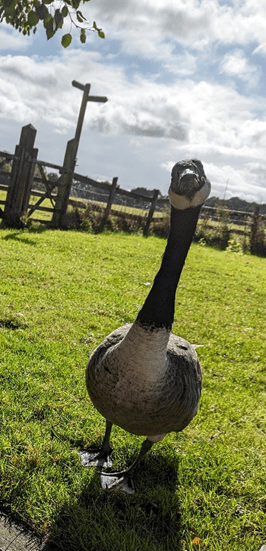
Henceforth it was thought that eating goose at Michaelmas brought good luck for the rest of the year. This caught my attention because I have recently encountered these fascinating fowl at close quarters. In early May, four tiny goslings waddled into our garden.  A local walker recalls seeing a family group being spooked, parents flying off, whilst the large brood fled in all directions. The senior geese likely returned to gather their young (since they’re attentive parents), but our 4 had scattered far and were abandoned. Barely a week old, they wouldn’t have survived the crows/buzzards. Local wildlife organisations weren’t interested in this “invasive” species and so, rather reluctantly, we became Mama & Papa Goose.  5 months on, they’re nearly fully grown and somewhat attached to us.

English contains goose sayings – traditionally they were integral to our lives, as food!  To “cook your goose” means you can’t undo something done and “to get goosebumps”- conjures the look of a plucked (but uncooked goose). It’s used when our hair follicles rise if cold, excited or anxious!  Another food-related proverb “what’s sauce for the goose is sauce for the gander” had a gender equality idea even back in the 1600s. The 21st Century version “What’s good for the goose, is good for the gander” is more often used to express hypocrisy: if one person is held accountable or subjected to scrutiny in some way, so should another.  E.g: a government passing Legislation to curb rights to demonstrate, whilst elsewhere fiercely defending Freedom of Expression. Seeing their habit of thrusting long neck/head forward when encountering anything new, explains the expression “to go for a gander” (have a look around). And “wild goose chase” describes exactly their propensity to half fly/half dash in random directions. If that happens to be towards you, it may appear aggressive, but I think it’s a greeting and they’re generally gentle creatures – hence the phrase “she’d not say boo to a goose” implying someone very timid.  Canada Geese, in particular – which “ours” are – get some bad press; e.g. the “invasive” tag. However, they were introduced in the 17th century as an exotic addition to King Charles II’s waterfowl collection in St. James’s Park, London. Nick Acheson in his book “The Meaning of Geese” says: “when (Canada geese) settle in town parks.. they are the only megafauna some people might see…the last shard of a shattered thing and … precious for that reason”. It seems geese support each other, look after their sick/injured and another’s young, where needed, and welcome strangers to their groups. Maybe we could learn from them.  Meanwhile, the attachment between us and our 4 invaders has become mutual; they’re certainly not destined for Christmas dinner and we’re quietly hoping our garden may be “good enough” for them to stay.

Brighton Line

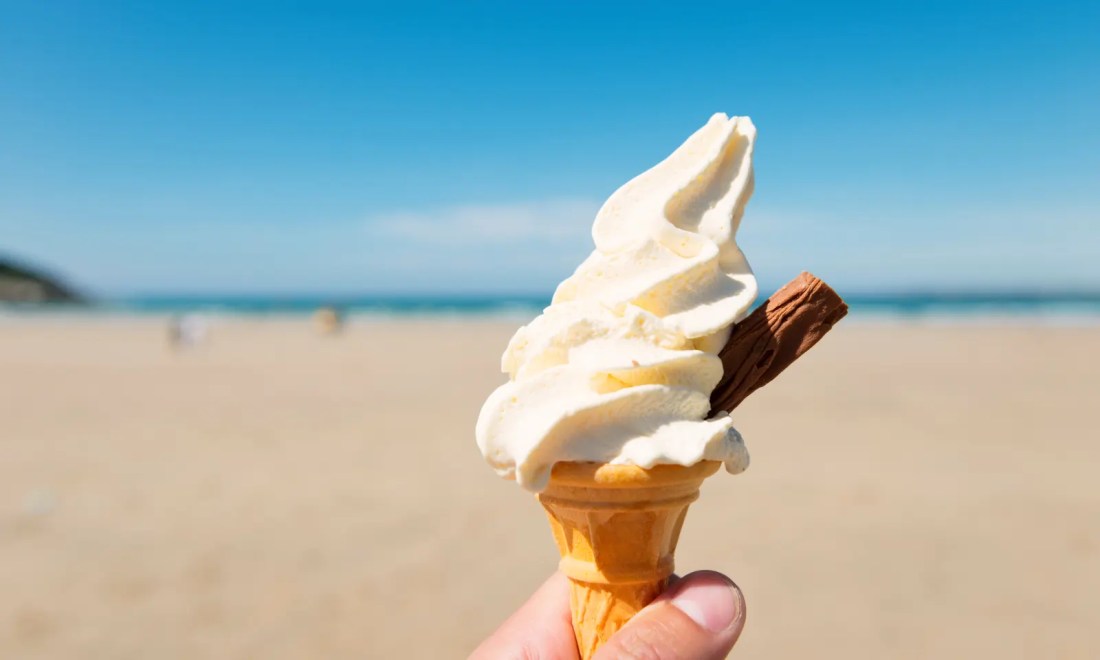
Today would have been my Mother’s 99th birthday. And reflecting on that, the image of an ice cream topped with a chocolate flake, popped into my head. Fond of cream, she adored an ice cream! It set me wondering where the “99” came from. Could it maybe have a connection with Bingo, (with associations of holidays and coastal resorts)?

My Mother loved the seaside. So with bucket and spade I’ve done a little digging, but it seems that a “99” was so-called, due to Italian influence on our ice cream sellers. When Italy had a Monarchy, the King retained an elite guard of 99 soldiers, so anything pretty special came to be known as a “99”. The story goes that some Italians coming to the UK in the ‘50s who set up ice cream businesses decided 99 was THE name for this wonderful treat.

My Bingo theory turns out to be built on sand, anyway, as the numbers only go up to 90. I did discover, though, that the bingo call for 59 is “Brighton line”, (being the train line that could bring Londoners from the capital for a day out in that south-coast resort). I would have visited Brighton many times with my Mother – and, for sure, we enjoyed an ice cream there. So, given its association in our collective psyche with sun, sea ‘n sand, for me, a 99 could be as synonymous with “Brighton line”, as a flake is with ice cream.

This is all making my mouth water … and I’m pretty certain that this snippet might have made my Mother smile. So, whilst I can’t call “Bingo!” I can say “Buon compleanno, mamma!”

Reigning Cats or Dogs?

Early on in lockdown, it was mooted that whilst dogs were delighted to have humans invade their daytime territory, cats were maybe not quite so thrilled at their routines being so rudely interrupted. Our particular canines and feline seem pretty happy, with tailwags and purrs aplenty, even if there has been some keyboard chaos.  Cats and dogs are all-the-more-cherished companions in such times of isolation, but observing their antics these past weeks has prompted me to re-reflect on the many references to them in our language. A small selection:

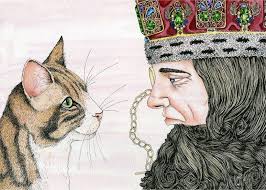
Like herding cats; Has the cat got your tongue? Let the cat out of the bag; Looks like something the cat dragged in; Take a cat-nap; Be a copy-cat; Put the cat amongst the pigeons; Like a cat that got the cream; Fat cat; Not a cat in hell’s chance;  The cat’s pyjamas/whiskers; Pussyfooting around and one I’d forgotten… A cat may look at a king – meaning we all have rights, whatever our status.

It’s raining cats and dogs; Fight like cat and dog; It’s a dog’s life; A dog’s dinner; Why keep a dog and bark yourself? Sick as a dog; Gone to the dogs; Dog-eat-dog; Let sleeping dogs lie; Doggy bag; Can’t teach an old dog new tricks; Hair of the dog; Like a dog with two tails; Dog-tired; In the dog-house and Three-dog night – with Aborigine or Eskimo origin – meaning a very cold night, requiring the extra warmth of 3 dogs on your bed.

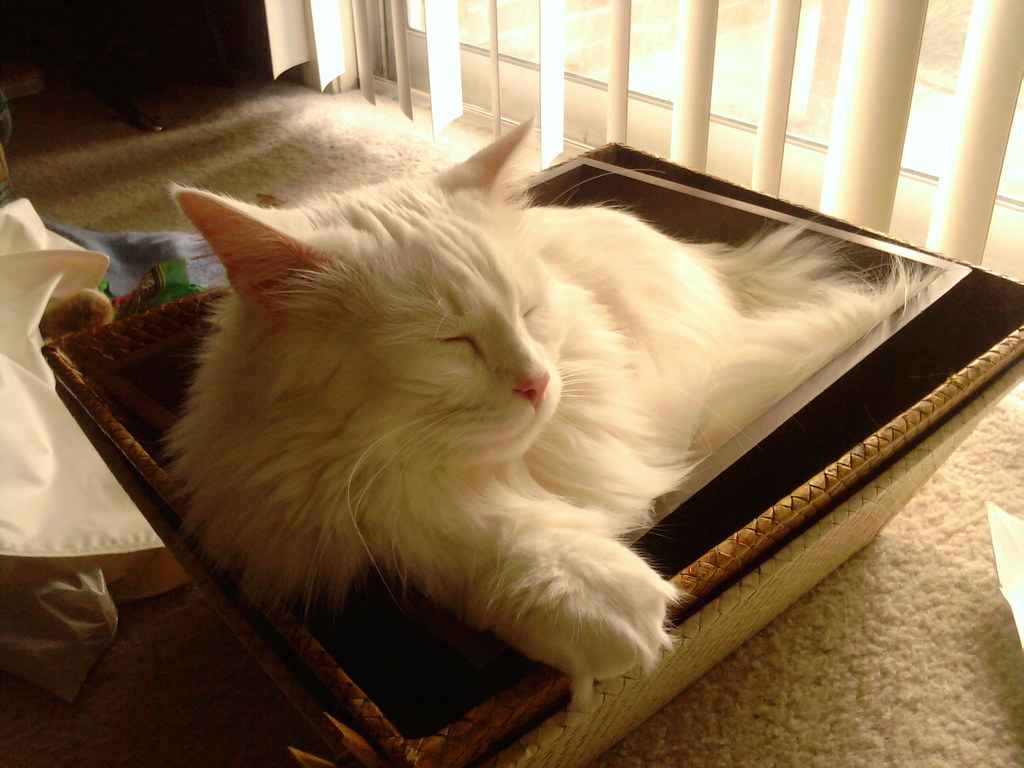
Our (two) dogs do end up on the bed sometimes … and the cat – well – he’s super-helpful around the office with his specialist skill of thinking inside the box.

Neither a borrower … nor a lender be

I hear Radio 2 are launching their 10th “500 words” competition this week. On last year’s winners’ show I was tickled to hear HRH the Duchess of Cornwall alluding to the influence of “outsiders” in our history/culture and to the number of “foreign” words in common English usage. She mentioned ‘pensive’, ‘odour’ and ‘poltergeist’ amongst others and her point that our language included so many words “loaned” from beyond these borders, set me thinking …

Maybe this de facto member of the Intelligentsia – certainly not the hoi-polloi – was leading us a (ballet) dance or up a cul-de-sac; should we kowtow to the status quo or believe such poppycock?  Were these claims made ad-nauseum by a prima donna Highness – she of the shampooed coiffure – bona fide? Could they bring a typhoon or tsunami of protest? Should we follow Robin Williams’ carpe diem dictum and leave the comfort of our home/chalet/the patio barbecue, pack our rucksack with mosquito spray, utensils, delicatessen-bought smorgasbord lunch including sausage, ketchup, chocolate, sherbet lemons, alcohol and anonymously, en-masse, as macho, tattooed, personae-non-grata, agent-provocateur wunderkinder alight our mopeds – with chutzpah – to pursue an alfresco refusenik vendetta?  Or perhaps avoid such a kamikaze, catastrophic or cartoon-inducing fiasco and become pundits or paparazzi for news of a genre capturing the leitmotiv or zeitgeist? Vis-à-vis any meaning, is this increasingly non-sequitous/nonsensical?…

full of colour …

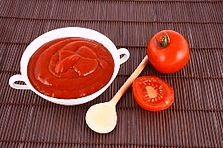
Indeed … and apologies to HRH and scooter/picnic enthusiasts everywhere, but you may see where I’m going; in the above at least 55 words/phrases are “borrowed”.  That’s well over a third … and these intruders have certainly added flavour/colour to our vocabulary – and our lives. Ketchup seems to have come from the Chinese kê-chiap (鮭汁) or Malay (kecap). Now WHERE would we be without the red stuff?

The good, the bad and the ugly

The idiom “as good as gold” originally referred to something that was real and genuine. In the past, business was conducted using a document that promised payment within a certain amount of time – a credit note. Some customers paid on time but others delayed payment or used forged credit notes to avoid paying altogether. So many business owners preferred being paid in gold/silver, which was real, tangible and immediate.

The current meaning shows a shift to something that is genuinely good – we speak mainly of a child being “as good as gold”.

At the other end of the spectrum, “the bad” and specifically the devil hides behind many sayings: “as ugly as sin” (meaning hideous looking) was first recorded in 1801 replacing the original “as ugly as the devil”.  And to “play devil’s advocate” meaning to argue an unpopular view or one the arguer doesn’t necessarily believe in, (to provoke debate or test validity of the opposing argument) also has religious origins.  It’s a translation from the Latin advocatus diaboli, the popular title given to the Catholic Church official who has to present arguments against the proposed canonisation of a saint.  Typically, the official would be proposing a view he didn’t agree with to ensure the right decision was made.  

Thesaurus Rex

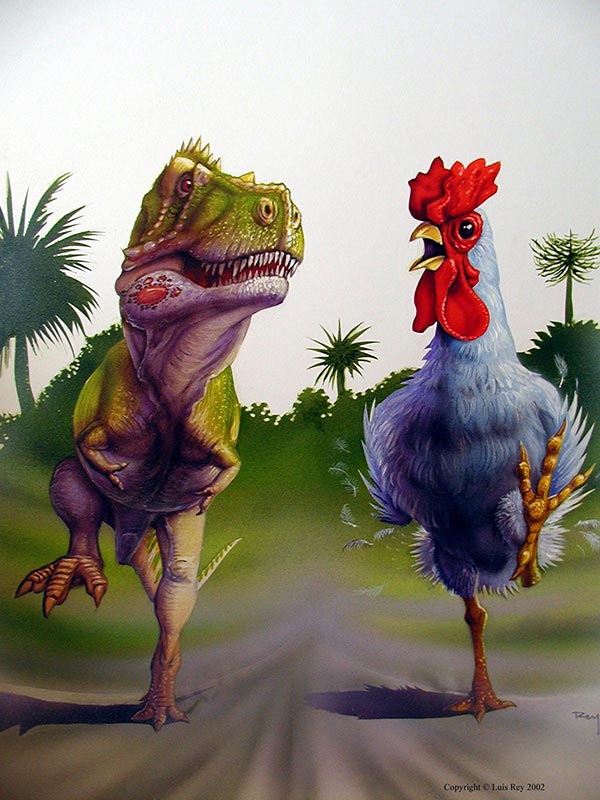
T-Rex and Giant Chicken running side-by side!
I wonder what it tastes like…

I keep chickens. This morning, while eating kindly-provided eggs, I thought about our feathered friends, and their not-too-distant relatives, the dinosaurs. They say that a modern chicken shares 80% of its DNA with the pre-historic T-Rex. A small, incremental change through each generation produced a seismic shift: from killer carnivore to clucking creature.

While tucking in to my tastefully-seasoned yolk, my dino-daydream was interrupted by a message on my mobile: one of the younger generation – a chick by comparison – speaking nostalgically about ‘throwbacks’. This confused me at first: back in my day, a ‘throwback’ didn’t necessarily mean something positive, just something from an earlier period. Perhaps, at that moment, I got a glimpse of how the T-Rex might feel about the chicken.

Is the language I grew up with slowly going extinct? When I open my mouth, do linguistic pterodactyls fly out? This worried me for a moment, but then I remembered: seismic shifts are often just made of many small, incremental changes. Dinosaurs still live among us: they just cluck a little more than they used to.

‘Andy Acronyms

They present challenges in translation but acronyms are part of our daily lives. We go SCUBA-diving, see a LASER light show, and bemoan the proliferation of QUANGOs. These are words that are formed from the first letters of other words; for instance, SCUBA = Self-Contained in Underwater Breathing Apparatus.

Many acronyms are names of organizations (NASA), computing terms (BASIC), or financial products (TESSA) but some encapsulate new concepts or phenomena in a memorable way. Ever since the YUPPIEs and NIMBYs of the 1980s, market researchers and others have coined snappy terms to describe new social types: we’ve encountered KIPPERS – older offspring still living at home with their parents (Kids In Parents’ Pockets Eroding Retirement Savings) and NEETs (young people Not in Education, Employment, or Training), while SKI-ers refers to parents who are Spending their Kids’ Inheritance (though not necessarily on the slopes).

More recently texting has produced thousands of new acronyms.  A couple of my favourites: TL;DR meaning Too Long, Didn’t Read (an excuse for not wading through particularly wordy content) and YOLO meaning You Only Live Once (an excuse for doing something you probably shouldn’t be doing).