
On February 14th, in the UK, we celebrate Valentine’s day and you can’t go far without seeing red roses – that classic symbol of romance. But symbols vary across cultures (and times) and another red flower can also have love connections.
In Simon Morrison’s excellent book “Bolshoi Confidential”, he describes how the ballet The Red Poppy (Красный мак, Krasniy mak) – when first performed before visiting dignitaries from China – caused offence, as it was assumed that the Soviets were referencing the Opium Wars.
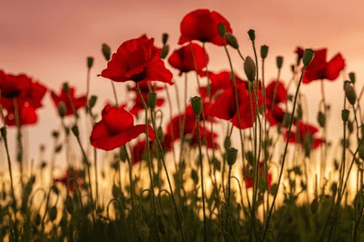
Poppies come in over 70 species and many hues: red, pink, purple, white, yellow, orange, black and the quite-rare blue poppy found only in the wild in the Himalayas. Red poppies (papaver rhoeas) grow globally, so have an abundance of symbolism: from love to death, from sleep and dreams and imagination to immortality, from sacrifice to remembrance. The drug morphine – made from papaver somniferum – is named for the Greek god of dreams and sleep, Morpheus. Poppies are linked with the fallen from World Wars I and II. Christians associate them with the blood of Christ and resurrection, but red poppies in Asian countries symbolise success and good fortune, as well as romantic love and freedom.
In an attempt at rapprochement, the Soviet Union renamed the ballet The Red Flower (Красный цветок, Krasniy tsvyetok). The message of love and tragic death in the cause of the greater good could thus appeal equally to Russian and Chinese audiences, respecting international sensitivities. Any drowsiness experienced during the 3-act ballet – the 1929 Leningrad production contained 75 dances – had, of course, nothing to do with papaver somniferum.
 Communiqué